
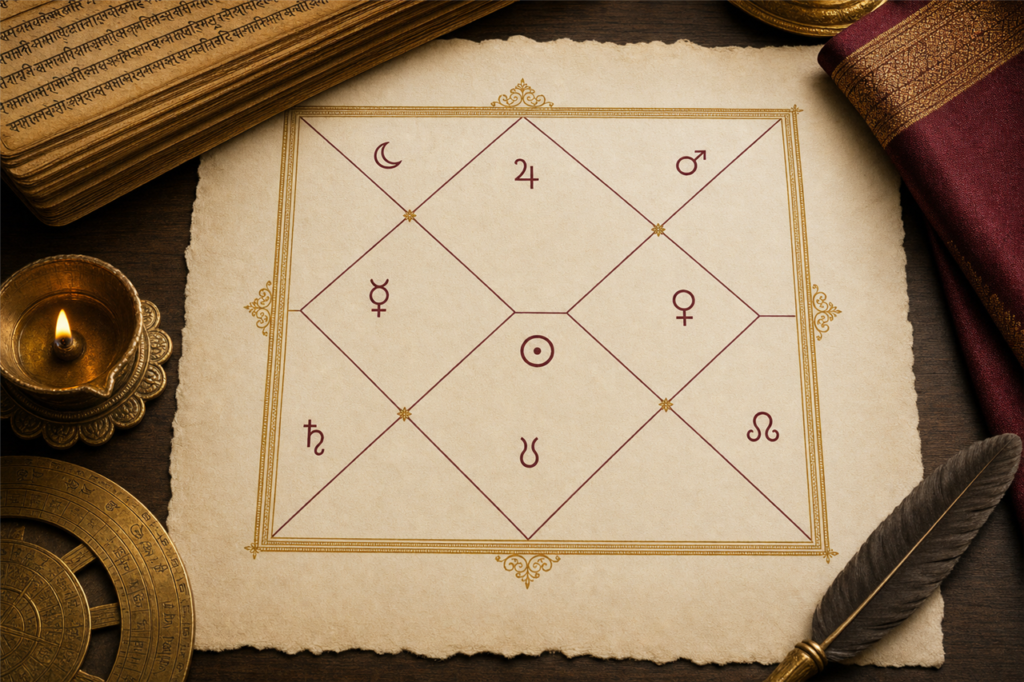
In an age of daily horoscopes and sun-sign memes, it is worth asking: what is classical Jyotish, and why does the distinction matter?
Vedic astrology — Jyotish — is one of the six Vedāṅgas, the limbs of Vedic knowledge. Its foundation lies in texts such as the Bṛhat Parāśara Horā Śāstra and the Jaimini system, studied not for entertainment but as a disciplined śāstra: learn the classics, test techniques, document findings, and practise with intellectual honesty.
More Than a Sun Sign
A proper chart reading begins with the lagna (ascendant), the Moon, the Sun, and the full configuration of grahas in rāśis and bhāvas — then extends into divisional charts, dasha periods, and transits. Reducing Jyotish to twelve sun-sign columns ignores nine planets, twelve houses, twenty-seven nakṣatras, and the nuanced interplay that makes each horoscope unique.
Research, Not Superstition
A research-minded approach to Jyotish asks clear questions, gathers charts, observes outcomes, and documents findings. This is the spirit behind my own work — including the ongoing Astro-Media Research study exploring birth-chart patterns among digital content creators.
Ethics in Practice
Classical Jyotish does not require fear, gemstone sales, or rituals outside the śāstra. As practitioners, our responsibility is to guide with clarity and compassion — illuminating karma and timing without manufacturing anxiety.
If you are new to this tradition, I invite you to explore the About page, read further articles here, or get in touch with your questions. Jyotish, rightly practised, is indeed the eye among the sciences.